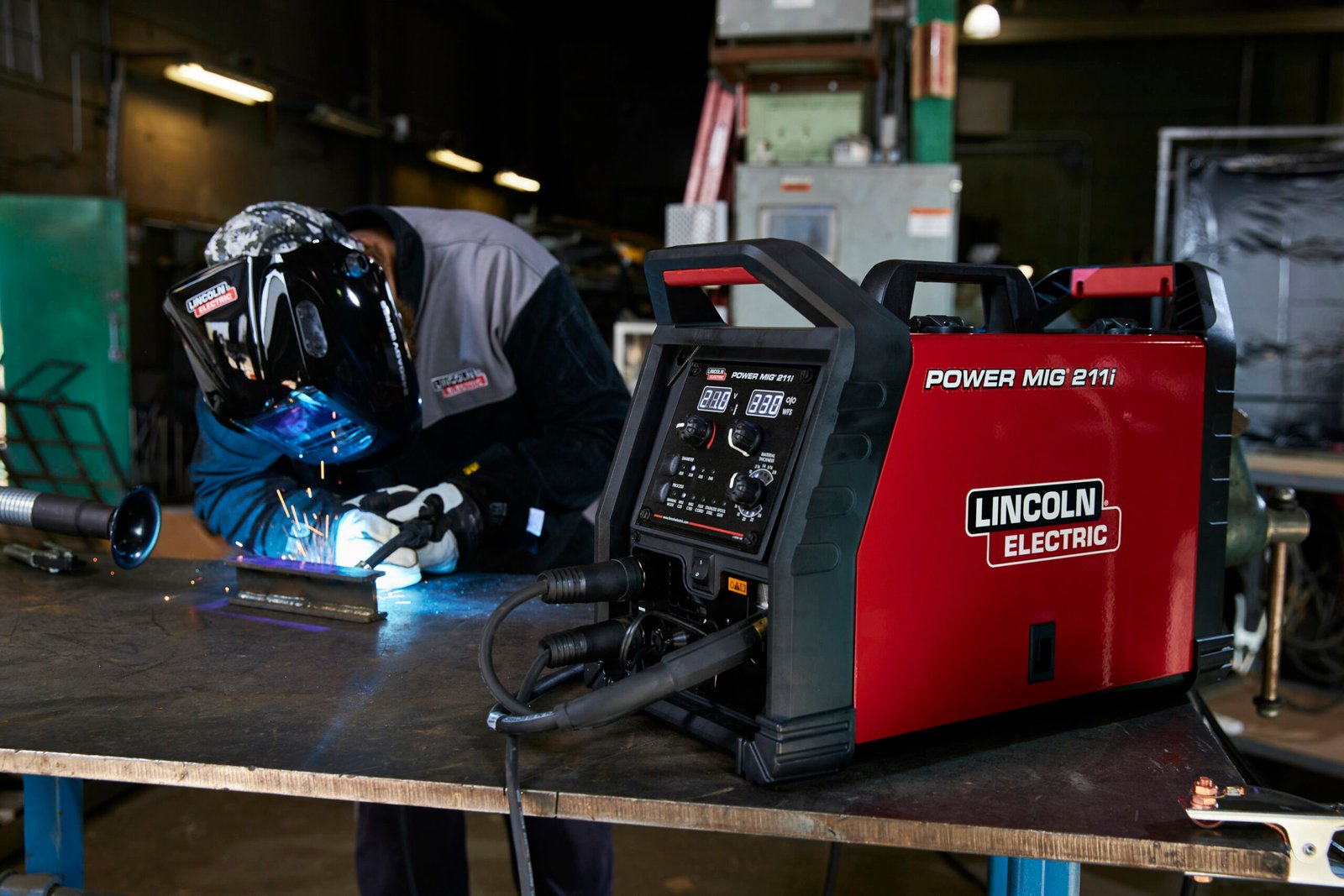
A welding machine that does not produce an arc can bring your work to a complete stop. Whether you are working on a construction site, in a fabrication workshop, or handling industrial maintenance in Pakistan, this problem can lead to delays, poor productivity, and unnecessary costs.
Many people assume the welding machine has completely failed, but in reality, the issue can be caused by several different factors. Identifying the exact cause requires proper inspection and testing by experienced technicians.
In this article, we will discuss the most common reasons why a welding machine fails to produce an arc and when it is time to seek professional repair services.
What Does It Mean When a Welding Machine Produces No Arc?
When you strike the electrode or trigger the welding torch but no arc is formed, it usually indicates that electrical current is not reaching the welding point correctly. The problem may be simple or may involve internal electrical components that require professional diagnosis.
Ignoring the issue and continuing to use the machine may result in more serious damage.
Common Causes of a Welding Machine Not Producing an Arc
1. Loose or Damaged Welding Cables
One of the most common reasons is damaged, worn-out, or loose welding cables. Poor electrical connections prevent sufficient current from reaching the electrode.
This problem becomes more common in industrial environments where cables experience constant bending, heat, and heavy usage.
2. Faulty Electrode Holder or Ground Clamp
A damaged electrode holder or an improperly connected ground clamp can interrupt the electrical circuit.
Even if the welding machine powers on normally, a poor connection may stop the arc from forming.
3. Incorrect Machine Settings
Different welding applications require different current and voltage settings.
Incorrect adjustments may prevent the machine from producing a stable arc, especially when changing between different welding processes or electrode sizes.
4. Internal Electrical Faults
Modern welding machines contain electronic boards, relays, transformers, rectifiers, capacitors, and other components.
If any of these parts become faulty due to age, overheating, voltage fluctuations, or moisture, the machine may stop producing an arc altogether.
Diagnosing these faults requires specialized equipment and technical expertise.
5. Power Supply Problems
An unstable or insufficient power supply is another common reason for arc failure.
Industrial welding machines require proper input voltage. Voltage drops, damaged power cables, faulty plugs, or electrical supply issues can all affect machine performance.
6. Overheating Protection Activated
Most modern inverter welding machines include thermal protection systems.
If the machine has been operating continuously for a long period, it may enter protection mode to prevent internal damage. During this time, welding performance can be interrupted.
7. Damaged Internal Wiring
Over time, internal wiring may become loose due to vibration, transportation, excessive heat, or continuous industrial use.
Even a small loose connection inside the machine can prevent normal operation.
8. Failed Control Board
The control board acts as the brain of many inverter welding machines.
When it develops a fault, the machine may switch on normally but fail to generate the welding output required to produce an arc.
9. Generator or Input Power Compatibility Issues
Many welding machines in Pakistan operate using generators at remote construction sites.
If the generator cannot provide stable power or is not compatible with the welding machine, arc problems may occur.
10. Lack of Regular Maintenance
Dust, metal particles, moisture, oil, and dirt gradually build up inside welding machines.
Without regular preventive maintenance, these contaminants can affect electrical components and eventually cause the machine to stop functioning properly.
Signs Your Welding Machine Needs Professional Inspection
If you notice any of the following symptoms, your machine should be inspected by qualified technicians:
- The machine powers on but produces no arc.
- Arc starts occasionally but stops unexpectedly.
- Welding output becomes weak or unstable.
- Burning smell or unusual sounds are coming from the machine.
- Warning or fault lights remain on.
- Circuit breakers trip repeatedly during welding.
- Machine overheats frequently.
Why Professional Diagnosis Is Important
Many welding machine problems appear similar from the outside, but their actual causes can be completely different.
Replacing parts without proper testing can waste both time and money. Professional technicians use specialized diagnostic equipment to identify the exact fault before carrying out repairs.
This approach helps restore machine performance while avoiding unnecessary replacement of working components.
We Repair All Major Welding Machine Brands
Our experienced technicians repair and maintain all major welding machine brands used across Pakistan, including:
- Lincoln Electric
- Miller
- ESAB
- Kemppi
- Fronius
- Denyo
- Panasonic
- OTC Daihen
- Hyundai
- Jasic
- Riland
- Weldmax
- And many more
We provide repair and maintenance services for inverter welding machines, MIG welders, TIG welders, ARC welders, plasma cutting machines, engine-driven welders, and industrial welding equipment.
Contact Us
If your welding machine is not producing an arc, avoid guessing the problem or replacing expensive parts without proper inspection.
At WeldingMachines.pk, our experienced technicians can diagnose the fault and provide professional repair and maintenance services for all types and brands of welding machines across Pakistan.
📞 Call Us: 03080888438
Our team is ready to help you get your welding machine back to reliable working condition with professional inspection, repair, and maintenance services.